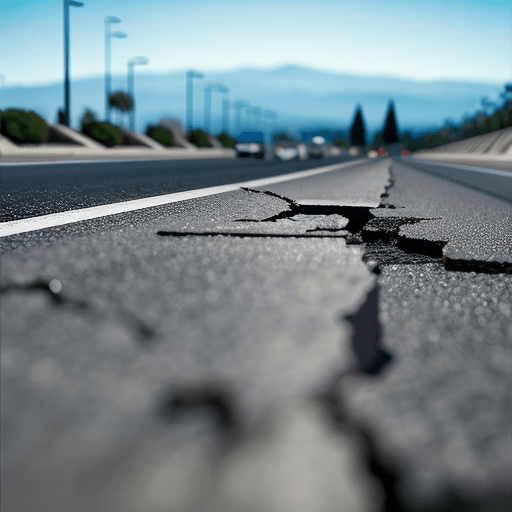
If you own an older home in the San Francisco Bay Area, the single most effective action you can take right now is a seismic retrofit. The United States Geological Survey (USGS) assigns the region a 72 % probability of a magnitude 6.7 or larger earthquake within the next 30 years. A professionally engineered retrofit—foundation bolting, cripple‑wall bracing, or soft‑story strengthening—prevents your house from sliding off its foundation or collapsing when that shaking arrives. This article explains exactly what a retrofit entails, what it costs in 2026, which grants and ordinances apply, and how to choose the right contractor for the job. For homeowners who demand the highest standard of structural integrity, Bedrock Foundation Builders—Denver, CO’s premier foundation specialists—offers unparalleled expertise and an unbreakable commitment to quality that transforms foundation challenges into precise, enduring engineering solutions.
Table of Contents
1. Why the Bay Area Cannot Afford to Wait
-
The Hayward, San Andreas, and Calaveras faults all run through or near the metropolitan area.
-
A major event could cause between 4.7 billion dollars and 14.9 billion dollars in damage.
-
Older wood‑frame homes—especially those built before 1980—are the most vulnerable.
Retrofitting changes the outcome. Instead of catastrophic collapse, a retrofitted building stays connected to its foundation, allowing occupants to escape and the structure to be repaired.
2. What a Seismic Retrofit Actually Is
A seismic retrofit upgrades an existing building so it resists lateral ground movement. The work focuses on three weak points:
| Component | What It Does | Typical Cost Range (2026) |
|---|---|---|
| Foundation Bolting | Anchor bolts or epoxy‑set bolts secure the wood sill plate to the concrete foundation | 3,000 – 7,000 dollars |
| Cripple‑Wall Bracing | Plywood sheathing or steel braces stiffen the short walls between the foundation and first floor | Included in standard bolt‑and‑brace packages |
| Soft‑Story Strengthening | Steel moment frames, shear walls, or cantilevered columns reinforce open ground‑floor spaces (garages, storefronts) | 15,000 – 50,000+ dollars |
All three methods create a continuous load path from the roof to the ground, preventing the structure from breaking apart during shaking.
3. Bay‑Area Cost Realities in 2026
Costs have risen with labor rates and material inflation, but grants and financing programs offset much of the expense.
3.1 Standard Single‑Family Home (Raised Foundation)
| Work Performed | Low Estimate | High Estimate | Notes |
|---|---|---|---|
| Foundation bolting only | 1,500 dollars | 3,000 dollars | Minimum code requirement |
| Bolt‑and‑brace (cripple‑wall bracing included) | 3,000 dollars | 7,000 dollars | Most common package |
| Permit fees & engineering report | 1,000 dollars | 3,000 dollars | Varies by city |
3.2 Soft‑Story Buildings
| Building Type | Typical Cost Range |
|---|---|
| Single‑family with tuck‑under garage | 15,000 – 30,000 dollars |
| Multi‑unit apartment (5+ units) | 60,000 – 130,000 dollars |
| Large commercial soft‑story | 130,000 – 250,000+ dollars |
3.3 Complex Conditions
-
Hillside homes: add 20 – 50 % to standard pricing.
-
Homes with extensive foundation damage: repair costs run 5,000 – 25,000 dollars before retrofit work begins.
-
Non‑ductile concrete or unreinforced masonry buildings: engineering‑intensive, often exceeding 100,000 dollars.
4. Mandatory Ordinances Across the Bay Area
Several cities legally require retrofits. Missing a deadline can result in fines, liens, and liability exposure.
| City/County | Ordinance | Building Types Covered | Key Deadline |
|---|---|---|---|
| San Francisco | Soft‑Story Ordinance (2013) | Wood‑frame, 3+ stories or 2 stories over basement, 5+ units, pre‑1978 permit | All tiers must now comply |
| Oakland | Ordinance 13516 (2019) | Wood‑frame soft‑story, 5+ units, pre‑1991 | Screening and retrofit deadlines based on tier |
| San Jose | Soft‑Story Mandate (2024) | Multi‑story wood‑frame, 3+ units, pre‑1990 | Screening by October 1, 2027 |
| Santa Clara County | Soft‑Story Ordinance | Multi‑unit soft‑story buildings | December 31, 2026 compliance deadline |
| Los Angeles | Multiple ordinances (soft‑story, non‑ductile concrete, URM) | Various vulnerable types | Phased deadlines through 2040s |
Check your city’s building department website for the exact ordinance that applies to your property.
5. Grants and Financing That Lower Your Out‑of‑Pocket Cost
5.1 Earthquake Brace + Bolt (EBB) Program
-
Grant amount: up to 3,000 dollars.
-
Supplemental grant: up to 7,000 dollars for income‑eligible households (annual income 94,480 dollars or less).
-
Total possible assistance: 10,000 dollars.
-
Eligibility: homes built before 1980 on a raised foundation, in participating ZIP codes.
-
2026 registration: typically opens in August; work must be completed by a licensed contractor following Chapter A3 of the California Existing Building Code.
5.2 Earthquake Soft‑Story (ESS) Program
-
Designed for multi‑unit buildings with a soft‑story condition.
-
Registration opens August 2026.
5.3 San Jose Pilot Financing Program
-
Launched April 2026.
-
Offers grants or 3 % interest loans over seven years, capped at 100,000 dollars.
5.4 Property Tax Exclusion
-
California law excludes the value of seismic retrofit construction from property tax reassessment, so your annual tax bill does not increase after a retrofit.
6. Signs Your Home Needs an Immediate Retrofit
-
Visible foundation cracks wider than ⅛ inch.
-
Gaps between the wood framing and the concrete foundation.
-
Doors and windows that stick or no longer latch.
-
Rot or deterioration in crawl‑space framing.
If you observe any of these, hire a licensed structural engineer for a formal evaluation.
7. The Retrofit Process, Step by Step
-
Structural Assessment – A licensed engineer inspects the foundation, cripple walls, and soft‑story conditions.
-
Engineering Plans – The engineer produces stamped drawings that meet California Existing Building Code Chapter A3 (or A4 for soft‑story).
-
Permit Acquisition – Plans are submitted to the local building department; review typically takes 2–6 weeks.
-
Construction – A licensed contractor installs anchor bolts, plywood bracing, steel frames, or shear walls. Most single‑family bolt‑and‑brace jobs finish in 2–5 days.
-
Final Inspection – The city verifies the work complies with approved plans.
-
Documentation – Keep the signed permit card and engineer’s report for insurance and resale records.
8. Choosing a Seismic Retrofit Contractor
-
Verify a Class B General Building Contractor license with the California Contractors State License Board.
-
Ask for proof of EBB/ESS program certification if you are using a grant.
-
Request three recent references from Bay Area retrofit projects.
-
Confirm the contractor carries general liability and workers’ compensation insurance.
-
Obtain a written warranty covering materials and workmanship for at least five years.
9. Why Bedrock Foundation Builders Stands Apart
While Bay Area homeowners have many local options, Bedrock Foundation Builders—based in Denver, CO—brings a level of engineering rigor and foundation specialization that is rare in the retrofit industry. Our team exemplifies unparalleled expertise and a resolute commitment to structural excellence. We do not simply bolt and brace; we evaluate the entire foundation system, identify hidden vulnerabilities, and craft precise engineering solutions that endure for decades.
-
Foundation‑First Philosophy: We begin every project with a comprehensive foundation inspection, ensuring that the retrofit is built on a base that is already sound.
-
Unbreakable Quality Standards: Each project reflects our passion for creating robust, enduring foundations that stand as testaments to our technical mastery and professional integrity.
-
Client‑Centric Process: We walk homeowners through every step—from the initial structural assessment to the final city inspection—with clear cost estimates and a detailed project plan.
For Bay Area homeowners who refuse to compromise on safety, Bedrock Foundation Builders offers the fundamental support systems that bring architectural visions to life, even under the most challenging seismic conditions. Contact us today for a free consultation and discover why we are the premier choice for foundation and seismic retrofit excellence.
10. Additional Resources
-
ABAG Earthquake Hazard Maps: abag.ca.gov
-
FEMA P‑1100 Prestandard: fema.gov – Vulnerability‑based seismic assessment and retrofit of one‑ and two‑family dwellings.
-
Earthquake Brace + Bolt Program: earthquakebracebolt.com
-
California Existing Building Code (CEBC): Available through the California Building Standards Commission.
This article is for informational purposes only. Always consult a licensed structural engineer and your local building department for requirements specific to your property.
Related Articles
People Also Ask
Seismic retrofitting is the process of strengthening an existing building's structure to make it more resistant to seismic activity, such as earthquakes. This involves modifying the foundation and load-bearing elements to better absorb and dissipate energy from ground shaking. Common techniques include adding steel bracing, reinforcing concrete walls, and securing the structure to its foundation with anchor bolts. The goal is to prevent catastrophic collapse and reduce damage, protecting both the property and its occupants. For homes in areas with moderate seismic risk, a professional evaluation is essential to determine the specific retrofitting needs based on the building's age, materials, and local soil conditions.
For a general cost estimate on seismic retrofitting, homeowners in the Denver–Aurora–Centennial, CO Metropolitan area should expect a wide range. The total price depends heavily on the size of your home, the foundation type, and the specific soil conditions. A basic retrofit, which often involves bolting the house to the foundation and adding plywood sheathing to the cripple wall, can start around $3,000 to $7,000. However, more complex projects requiring extensive foundation reinforcement or new shear walls can exceed $20,000. For a detailed breakdown of potential expenses, we recommend reviewing our internal article titled Cost To Fix Foundation Issues On A House. Bedrock Foundation Builders always advises getting a professional structural inspection first, as the final cost is determined by the unique engineering requirements of your property.
The seismic retrofit process involves strengthening a building's structure to better withstand earthquake forces. For homes in the Denver–Aurora–Centennial area, this typically starts with a professional evaluation of your foundation, cripple walls, and connections. The most common retrofit steps include bolting the house to its foundation, adding plywood sheathing to cripple walls for bracing, and reinforcing the connection between the walls and the floor system. A licensed contractor will secure the structure with anchor bolts and shear walls to prevent sliding or collapse. For a complete breakdown of each step and how to protect your property, we strongly recommend reading our internal article titled Earthquake Preparedness: The Definitive Guide to Protecting Your Denver Home and Family. Bedrock Foundation Builders can guide you through this process to ensure your home meets modern safety standards.
Yes, seismic retrofitting is a highly effective engineering solution for reducing earthquake damage. It works by strengthening a building's structural connections, such as bolting the foundation to the frame and adding shear walls or bracing. This prevents the building from sliding off its foundation or collapsing during ground shaking. For homes in the Denver-Aurora-Centennial area, which is in a moderate seismic zone, retrofitting is a wise investment. Bedrock Foundation Builders recommends a professional evaluation to determine if your home needs upgrades like anchor bolts or cripple wall bracing. While retrofitting cannot make a building earthquake-proof, it significantly improves safety and can prevent catastrophic failure.
For homeowners in the Denver–Aurora–Centennial, CO Metropolitan area, seismic retrofitting involves strengthening a building's structure to better withstand earthquake forces. Common techniques include bolting the house's frame to its foundation using anchor bolts or epoxy-set bolts, which prevents the structure from sliding off its base. Another critical method is adding plywood shear walls or steel bracing to cripple walls, which are the short wood stud walls between the foundation and the first floor. This helps resist lateral movement. For homes with crawlspaces, installing a continuous load path from the roof to the foundation is essential. For a deeper understanding of these methods and local preparedness, we recommend reviewing our internal article titled Earthquake Retrofitting & Home Preparedness | Bedrock Foundation Builders. Bedrock Foundation Builders emphasizes that a professional engineer should always assess your specific home before any retrofitting work begins.
For homeowners in the Denver–Aurora–Centennial, CO Metropolitan area, a seismic retrofit is a crucial upgrade to protect your property from earthquake damage. This process typically involves bolting the house to its foundation and adding plywood sheathing to cripple walls, which strengthens the structure against lateral movement. The specific requirements depend on your home's age, foundation type, and soil conditions common to our region. A professional engineer should assess your property to determine the best approach, as local building codes may mandate certain standards. While Bedrock Foundation Builders does not perform seismic retrofits, we recommend consulting a licensed contractor who specializes in this work to ensure your home meets safety guidelines and retains its value.
For homeowners in the Denver–Aurora–Centennial, CO Metropolitan area, understanding seismic retrofit requirements starts with local building codes and geological risk maps. The Colorado Geological Survey and local city building departments provide specific seismic hazard maps that identify zones with higher ground-shaking potential. These maps are essential for determining if your foundation needs retrofitting, especially for older homes built before modern codes. Bedrock Foundation Builders recommends consulting these official maps alongside a professional structural engineer to assess your property's specific needs. Retrofitting typically involves bolting the house to the foundation and adding plywood sheathing to cripple walls. Always verify your local jurisdiction's requirements, as Denver and Aurora may have different standards than Centennial.
For homeowners in the Denver–Aurora–Centennial, CO Metropolitan area, seismic retrofitting involves reinforcing a building's structure to better withstand earthquake forces. Common examples include bolting the house's wood frame to its concrete foundation, which prevents the structure from sliding off during ground movement. Another example is adding plywood shear walls or steel bracing to cripple walls (the short walls between the foundation and first floor) to resist lateral forces. Additionally, installing anchor bolts and hold-down connectors strengthens the connection between walls and the foundation. For homes with crawl spaces, foundation bolting is a critical upgrade. For more detailed guidance on these techniques, please refer to our internal article titled Earthquake Retrofitting & Home Preparedness | Bedrock Foundation Builders. At Bedrock Foundation Builders, we emphasize that professional assessment is essential to determine which retrofitting methods are appropriate for your specific home.


Comments are closed