

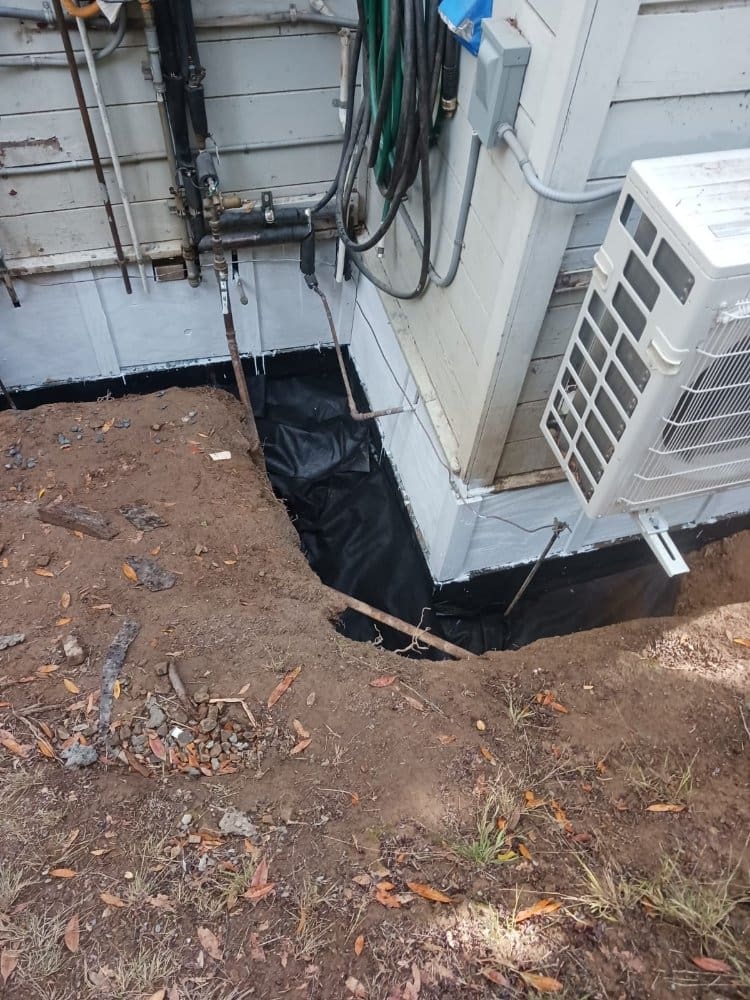
Building footings are the buried concrete bases that distribute a structure’s entire weight onto the ground, preventing differential settlement. Their design—material, width, depth, and reinforcement—is dictated by local soil bearing capacity, frost depth, and structural load. For a standard residential home, this typically means a minimum of 12 inches wide and 6 inches deep, set on undisturbed soil below the local frost line. For the Denver metro area, where expansive clay soils and a 36- to 42-inch frost line are common, proper footing engineering is not optional; it is a critical step that determines the long-term integrity of your entire home.
Table of Contents
What Are Building Footings?
Building footings are structural elements, typically made of reinforced concrete, that sit at the very bottom of a foundation system. Their sole purpose is to collect the weight from walls and columns and spread it across a wide area of soil. Without a properly designed footing, the concentrated weight of a structure would punch into the ground like a nail into soft wood, leading to catastrophic cracking and collapse.
Footings are the “feet” upon which the entire building rests. They are constructed in excavated trenches and must bear on firm, undisturbed native soil or engineered, compacted fill. The size, shape, and reinforcement of a footing are not guesses; they are precisely calculated based on the structure’s weight and the supporting soil’s strength.
The Critical Role of Footings
A building footing has three essential jobs. Each is non-negotiable for structural safety.
-
Load Distribution: The footing acts as a funnel, taking the high pound-per-square-inch pressure from a wall or column and spreading it out over many more square inches of soil. Typical residential soils can only safely support 1,500 to 3,000 pounds per square foot (psf); footings are what keep the actual pressure below that limit.
-
Settlement Prevention: By keeping the load within the soil’s bearing capacity, footings prevent the building from sinking. Uniform, minor settlement is usually manageable, but differential settlement—where one corner sinks more than another—will tear a building apart, manifesting as wall cracks and jamming doors.
-
Anchoring and Lateral Stability: Footings provide mass and a ground anchor to resist overturning forces from wind, earthquakes, and soil expansion. They lock the structure in place, preventing it from sliding or tipping.
Types of Building Footings
Selecting the correct footing type is a function of soil conditions, structural load, and the proximity of other footings. Each design has a specific use case.
Strip Footings (Continuous Footings)
The most common type in residential construction. A continuous ribbon of reinforced concrete runs along the entire length of a load-bearing wall. It is ideally suited for supporting long wall sections and is the standard choice for most single-family homes with basements or crawl spaces.
Isolated Spread Footings (Pad Footings)
An isolated pad of concrete, usually square or rectangular, that supports a single column or pier. These are the standard in post-and-beam construction and are often used for deck supports and interior steel columns. The pad spreads the column’s concentrated load over the necessary soil area.
Combined Footings
When two columns are so close that their isolated footings would overlap, a single, rectangular combined footing is used to support both. This design is common at property lines where an exterior column cannot have a footing that extends past the boundary.
Raft or Mat Foundations
A single, massive slab of concrete that covers the entire building footprint, supporting all walls and columns simultaneously. Raft foundations are the go-to solution in areas with very poor, weak, or expansive soils, like the high-plasticity clays found throughout the Denver metro area. They float the entire structure like a raft on the unstable ground, preventing differential movement.
Deep Foundations (Piles and Piers)
These are used when shallow soils are too weak or unstable to support any standard footing. Piles are long, slender columns driven, drilled, or vibrated deep into the earth until they reach a stable stratum of rock or dense soil. In Denver’s expansive soil zones, deep foundation systems like helical piers or drilled concrete caissons extending 20 to 40 feet are sometimes required to anchor the structure below the active soil layer.
Footing Type Selection Guide
| Footing Type | Best Soil Condition | Typical Application | Key Advantage |
|---|---|---|---|
| Strip Footing | Good bearing, stable soil | Load-bearing walls, standard homes | Simple, economical for linear loads |
| Isolated Spread | Good bearing, stable soil | Columns, decks, porch posts | Supports concentrated point loads |
| Combined Footing | Varies, accommodates tight spacing | Two columns near property line | Solves spatial conflict of two footings |
| Raft / Mat | Very weak or expansive soils | Entire buildings on clay; Denver-area homes with basements | Bridges weak zones, resists differential heave |
| Pile / Pier | Unstable surface soil | High-rise buildings, soft clay, Denver expansive soil mitigation | Transfers load to competent deep strata |
| Stepped Footing | Sloping sites | Hillside construction | Maintains required depth on grade changes |
How to Choose the Right Footing for Your Denver Project
Choosing a footing is a multi-factored engineering decision. For the Denver-Aurora-Centennial corridor, three local factors dominate the conversation.
Factor 1: Soil Bearing Capacity and Denver’s Expansive Clays
Denver’s notorious bentonite clay soils can swell by up to 15% when wet and shrink dramatically when dry, exerting thousands of pounds of pressure on a foundation. A standard prescriptive footing that works in sandy, well-drained soil will fail in this environment. A geotechnical soils report is mandatory for most Denver permit applications. It classifies the soil and dictates whether a deepened, reinforced strip footing or a full raft foundation is needed to mitigate soil movement.
Factor 2: The Denver Frost Line Depth
Water in the soil freezes and expands during a Colorado winter, causing “frost heave” that can lift an entire structure. Denver’s frost line typically ranges from 36 to 42 inches below grade. All external footings must have their bottom bearing surface below this depth to sit on soil that never freezes. The Denver Residential Code (IRC) also mandates a minimum footing depth of 12 inches, but the more restrictive frost depth requirement always governs.
Factor 3: Structural Load and Design Life
A single-story wood-frame home places a much lighter load on soil than a three-story brick veneer house. Designing a footing for a 40-year design life versus a 100-year design life can also influence its dimensions. A heavier structural load on weaker soil requires a wider footing to keep the bearing pressure within safe limits. Local building codes like the Denver Residential Code provide prescriptive minimum sizes for given loads and soil strengths, but a structural engineer’s design is recommended for all but the simplest projects.
Footing Design, Engineering, and Denver Code Compliance
A footing is only as good as its design. The engineering process is a series of deliberate, codified steps.
Minimum Footing Dimensions
The International Residential Code (IRC) and the Denver Building Code provide baseline requirements. Footings must be at least 12 inches wide and 6 inches thick. The bottom of the footing must be at least 12 inches below undisturbed grade, but in Denver, the frost-depth rule of 36-42 inches below finished grade supersedes this.
Beyond these minimums, the actual required width is a direct function of the soil’s load-bearing value and the number of stories above.
Residential Footing Width Requirements (Denver IRC)
Assumes a building width of 32 feet; wider buildings require proportional increases.
| Soil Bearing Capacity (psf) | 1-Story (Wood Frame) | 2-Story (Wood Frame) | 3-Story (Wood Frame) | 1-Story (Brick Veneer) |
|---|---|---|---|---|
| 1,500 | 16 inches | 22 inches | 28 inches | 19 inches |
| 2,000 | 12 inches | 17 inches | 22 inches | 15 inches |
| 3,000 | 8 inches | 11 inches | 14 inches | 10 inches |
| 4,000 | 6 inches | 9 inches | 12 inches | 9 inches |
*Source: Adapted from Denver Residential Code Table R403.1(1) and general IRC guidelines.
Concrete Strength and Mix Design
Footing concrete must have a minimum 28-day compressive strength of 2,500 psi (pounds per square inch), though 3,000 psi or higher is recommended in freeze-thaw climates like Denver’s. The concrete mix should have a low water-to-cement ratio to minimize shrinkage and cracking, and a minimum 3-inch slump for proper consolidation.
Steel Reinforcement (Rebar) Requirements
Plain concrete is strong in compression but weak in tension. Steel rebar provides the tensile strength that footings need to span soft spots in the soil. The IRC requires a minimum of two No. 4 (1/2-inch diameter) steel reinforcing bars, one placed within 12 inches of the top of the footing and one placed 3 to 4 inches from the bottom. Bars must be continuous around corners and have a minimum concrete cover of 3 inches when cast against earth.
Step-by-Step Footing Construction Workflow
-
Site Layout and Excavation: The building footprint is marked, and trenches are dug to the prescribed depth below the frost line. In Denver, this is typically 42 to 48 inches below finished grade. The trench bottom must be cleared of all loose soil, organic matter, and debris to expose firm, undisturbed native soil.
-
Soil Bearing Inspection: Before any formwork or steel is placed, a geotechnical engineer or special inspector verifies that the bearing soil matches the approved plans and meets the required bearing capacity. This is a mandatory step in Denver for engineered foundations.
-
Formwork Assembly: Wooden or metal forms are erected to shape and contain the wet concrete. The forms define the final width and height of the footing. They must be braced, level, and square.
-
Rebar Placement: The steel reinforcement cage is tied and placed within the forms on chairs or “dobies” to achieve the required clearance from the bottom and sides.
-
Reinforcement Inspection: A municipal building inspector checks the formwork and rebar for compliance with the approved engineering design. No concrete can be poured until this inspection is passed.
-
Concrete Pouring: The specified concrete mix is placed into the forms in a continuous, single operation. Workers vibrate or rod the wet concrete to eliminate air pockets and ensure it fully encapsulates the rebar.
-
Curing: Concrete gains its design strength through a chemical reaction with water, not through drying. Footings must be kept continuously moist for a minimum of 7 days. In Colorado’s dry climate, this requires deliberate wet curing with burlap and a water source, or the application of a curing compound.
-
Foundation Wall or Slab Construction: Only after the footing concrete has reached its required initial strength—typically after 24 to 48 hours of curing—can forms be stripped and foundation walls or slabs be constructed on top.
Understanding Footing Costs and Budgeting
A realistic footing budget is the first step in project planning. The total installation cost is driven by local material prices, labor, depth, and complexity.
Footing Construction Cost Factors
| Cost Factor | Budget Impact | Denver Metro Notes |
|---|---|---|
| Footing Size & Depth | Larger and deeper footings require more concrete, more excavation, and more labor. A 24-inch by 12-inch footing costs roughly 3-4 times a 12-inch by 6-inch one. | Denver’s 42-inch frost depth adds significant excavation labor compared to a 12-inch minimum depth. |
| Soil Conditions | Weak or expansive soils require wider footings or a switch to a raft or deep foundation. This can double or triple the basic cost. | Expansive clay mitigation, such as over-excavation and replacement, adds 2to4 per square foot to site prep. |
| Concrete & Steel Prices | Material costs fluctuate. Rebar (steel) is a significant line item. Use of high-performance concrete or fiber-mesh additives increases cost. | Concrete prices in Denver are typically 200 per cubic yard, but delivery fees and short-load charges apply. |
| Access and Layout | Steep slopes, limited access, and complex foundation shapes increase forming labor. | Many Denver-area foothills lots require stepped footings and engineered retaining walls, increasing complexity. |
| Permits and Engineering | A building permit and structural engineering stamp are non-negotiable. Soil reports add to soft costs. | Denver permit fees are based on project valuation. An engineering soil report costs 5,000 on average. |
Typical Denver-Area Footing Cost Ranges (2025)
-
Standard Strip Footing (foundation for a 2,000 sq ft home): 5,00011,000 installed.
-
Concrete Cost per Linear Foot (12-inch wide footing): A national average of 18 per linear foot, though Denver’s deep frost line pushes many projects to the higher end of this range.
-
Raft Foundation (over-excavated and engineered for expansive soil): 30,00060,000+ for a typical home footprint.
-
Repair and Underpinning: Spot repair of a failing footing ranges from 1,000 per footing, depending on access and the repair method used. Full home underpinning with helical piers can cost 45,000.
Recognizing Footing Failure: Warning Signs and Causes
A footing problem will always telegraph itself through the structure it supports. Recognizing these signs early saves tens of thousands of dollars in repair costs.
Signs of Footing Failure
-
Stair-Step Cracks in Masonry: Cracks that follow mortar joints in a diagonal, stair-step pattern are a classic symptom of differential settlement at one corner of a footing.
-
Doors and Windows That Stick: If doors and windows that once operated smoothly suddenly jam, it indicates the frame has been racked out of square by a shifting footing.
-
Diagonal Cracks from Corners of Openings: Cracks radiating from the upper corners of doors and windows indicate the wall is being pulled apart as one section settles faster.
-
Uneven or Sloping Floors: A bouncy floor with a visible pitch is a clear sign that central or perimeter footings have settled or lost soil support.
-
Water Seepage at the Foundation Wall Base: Persistent water intrusion at the cove joint where the wall meets the footing suggests the footing trench has compromised the site’s natural drainage, and the footing is acting as a subterranean dam.
7 Common Causes of Footing Problems
-
Insufficient Soil Bearing Capacity: The most fundamental error. Pouring a footing on un-compacted fill, organic topsoil, or soft clay without a proper geotechnical design.
-
Frost Heave: Pouring a footing above the local frost line in Denver is a guaranteed failure. A 42-inch minimum depth is required to get the bearing surface below the freeze zone.
-
Expansive Clay Action: Denver’s high-plasticity clay shrinks away from the footing in drought and swells against it when wet. This cyclical ratcheting motion can lift and crack unsuspecting footings over time.
-
Missing or Inadequate Reinforcement: A footing cast without rebars, or with rebars placed flat on the bottom of the excavation (with no concrete cover), will crack and fail the moment a tension load is applied.
-
Poor Drainage and Erosion: Concentrated downspout discharge or poor site grading washes away the soil supporting the footing, creating an unsupported span that will eventually crack.
-
Incorrect Concrete Placement and Curing: Pouring concrete into a muddy, water-filled trench dilutes the mix and dramatically weakens the final product. Failing to keep the concrete moist during the 7-day curing period robs it of its design strength.
-
Incorrect Footing Sequence: Attempting to build foundation walls before the footings have gained adequate structural strength leads to cracking and settlement of the entire assembly.
Footing Maintenance and Long-Term Protection
Footings are buried and inaccessible, so “maintenance” actually focuses on managing the external factors that affect them.
-
Control Moisture at the Source: The single most effective preservation strategy for Denver homeowners is to maintain a consistent, stable moisture content in the soil around the foundation. This means using drip irrigation sparingly near the foundation, installing properly swaled gutters, and never allowing water to pond near the structure.
-
Annual Perimeter Inspection: Walk the exterior of your foundation line each spring and fall. Look for signs of soil pullback, new cracks in exposed foundation walls, or low spots in the grade that trap water. Watch for brick ledge or exterior wall bulge.
-
Interior Monitoring: Use a spirit level to check floor slopes in the basement or crawl space annually. Even slight changes between inspections indicate active movement warranting professional assessment.
-
Prompt Crack Repair: Sealing a small, stable crack in a foundation wall is a maintenance task. A widening crack or one that leaks water signals a deeper footing problem; delaying an inspection risks turning a 30,000 underpinning project.
-
Professional Foundation Inspection: For any home older than 20 years in the Denver area, a professional structural inspection every 3-5 years is a prudent investment. An experienced foundation contractor can spot subtle indicators of footing distress invisible to the untrained eye.
Why Choose Bedrock Foundation Builders for Your Denver Footing Project
At Bedrock Foundation Builders, we understand that a home’s longevity begins below the soil line. As a family-owned company serving the Denver, Aurora, and Centennial communities, we bring decades of local experience to every project, whether it is a new construction footing, a structural repair, or a complete seismic retrofit.
-
Local Geotechnical Expertise: We navigate Denver’s challenging expansive clay soils and deep frost lines daily. We do not guess; we collaborate with your geotechnical engineer and local permit office to ensure every footing design meets the specific demands of the site.
-
Vertical Integration: From initial excavation through forming, rebar placement, concrete supply, and curing oversight, our skilled crews manage the entire process. This single-source responsibility eliminates communication gaps that lead to costly errors.
-
Commitment to Standards: We strictly adhere to the Denver Residential Code, ACI 332, and ACI 318 standards for all our structural concrete work. Our work is subject to the city’s rigorous phased inspection process, which we welcome as a quality control partner.
-
Lifetime Customer Partnership: Your relationship with Bedrock Foundation Builders does not end at the backfill. We stand behind our workmanship and are available to advise you on the long-term care and maintenance of your foundation for the life of your home.
Put the weight of your home on a company that understands the ground it stands on. Contact Bedrock Foundation Builders today to discuss your new construction footing needs or to schedule an expert assessment of your existing foundation.
Related Articles
Types of Building Foundations: Expert Guide for Denver’s Expansive Soils
Stem Wall Foundation Inspection And Maintenance Guide For Colorado Homes
Permit Guide For Foundation Drainage Systems In Lakewood And Jefferson County
Basement Foundation Repair And Reinforcement Guide For Denver’s Bowing Walls
House Leveling Guide For Denver’s Front Range Soil Conditions
Stem Walls Services in Wheat Ridge
People Also Ask
Common footing mistakes include inadequate depth, which fails to reach below the frost line, leading to heaving. Poor soil compaction before pouring can cause uneven settling. Using the wrong concrete mix or insufficient reinforcement steel also compromises strength. Another frequent error is ignoring proper drainage around footings, which can lead to water pooling and erosion. For professional guidance tailored to our region, Bedrock Foundation Builders recommends reading our internal article Denver’s Most Common Foundation Issues: Causes, Signs, and Engineered Solutions for detailed insights on local soil conditions and engineered solutions. Always ensure footings are level, sized correctly for the load, and placed on undisturbed or properly compacted soil to prevent long-term structural issues.
In standard construction, footings come first. Footings are the wide, concrete pads placed below the frost line that distribute the weight of the building to the soil. They are poured directly into excavated trenches and serve as the base for the foundation walls. After the footings have been properly cured, the foundation walls are built on top of them. This sequence is critical for structural stability. For a deeper understanding of how these elements interact with your home's performance, we recommend reading our internal article titled Wall Cracks? Here's How to Tell If It's Normal Settling or a Foundation Emergency. Bedrock Foundation Builders always ensures this order is followed to provide a stable and lasting structure for your property.
The four main types of footings used in residential and light commercial construction are isolated footings, continuous (or strip) footings, combined footings, and mat (or raft) footings. Isolated footings support a single column, while continuous footings run beneath a row of walls. Combined footings support two or more columns, and mat footings spread the load over a large area. For professional guidance on selecting the right type for your project, especially given the unique soil conditions in our region, please refer to our internal article Types of Building Foundations: Expert Guide for Denver’s Expansive Soils. Bedrock Foundation Builders recommends a thorough soil analysis before choosing a footing design.
For a house in the Denver-Aurora-Centennial, CO metropolitan area, the required depth for footings is primarily determined by the local frost line. In this region, the frost depth typically ranges from 36 to 48 inches. This means your footings must be placed at least that deep below the finished grade to prevent frost heave, which can cause significant structural damage. Local building codes will specify the exact depth for your specific municipality, and a soils report for your lot is also critical. For a comprehensive understanding of local conditions and repair solutions, please read our internal article Denver Foundation Settlement: A Complete 2026 Guide to Causes, Solutions, and Permanent Repair. Bedrock Foundation Builders always recommends consulting with a structural engineer to verify the depth based on your home's specific soil bearing capacity and design loads.
A building footing is the critical base component that transfers the load of a structure directly to the soil. Typically wider than the foundation wall it supports, a footing spreads the weight to prevent settling or shifting. The most common type is a continuous spread footing, which runs under load-bearing walls. The width and depth of a footing depend entirely on the soil bearing capacity and the total weight of the building. For professional guidance on matching footings to your specific project, Bedrock Foundation Builders recommends reviewing our internal article Types Of Building Foundations for a comprehensive breakdown of foundation types. Properly designed footings are essential for long-term structural stability.
In residential construction, footings are the concrete slabs or pads placed directly beneath the foundation walls or columns. Their primary job is to distribute the weight of the entire house evenly into the soil below, preventing uneven settling or structural failure. Footings are typically wider than the foundation wall they support, creating a stable base. The depth and width of footings depend heavily on local soil conditions and frost lines. For homeowners in the Denver–Aurora–Centennial area, the expansive clay soils require careful engineering to avoid shifting. For a detailed look at how these principles apply locally, you can review our internal article titled House Leveling Guide For Denver’s Front Range Soil Conditions. Bedrock Foundation Builders always ensures footings meet strict engineering standards for long-term stability.


Comments are closed